YAWK
- Commercial Director
- Film Director
- Creative Director

Video Production NGO Morocco | YAWK Marrakech
Video production NGO Morocco work runs on fundamentally different constraints than commercial video. Budgets are smaller and more scrutinized, timelines are tied to a campaign or reporting deadline instead of a flexible release date, and the footage has to communicate a cause honestly rather than sell a product. That distinction shapes everything from how a shoot day is planned to how the final edit gets structured.
Thank you for reading this post, don't forget to subscribe!What Video Production for NGOs Involves in Morocco
NGO and institutional clients are almost always documenting real programs, real beneficiaries, and real field conditions — not staging a scene for a brand. That changes the entire approach. The crew has to be small enough to move without disrupting the work being filmed, comfortable operating outside a controlled studio environment, and capable of turning raw footage into something that communicates urgency or impact without exploiting the people being filmed. Consent and sensitivity aren’t an afterthought here — they’re part of how the shoot is planned from the first conversation with the organization’s field team.
Pre-production for this kind of project leans heavily on coordination rather than creative control in the traditional sense. Before a single frame is shot, YAWK works with the organization to understand what’s actually happening on the ground, when it’s happening, what needs documenting versus what needs to stay untouched, and how a small crew can be present without becoming part of the story. That’s a different discipline than directing a commercial shoot where every element is built from scratch — here, the job is to capture something real, accurately and respectfully, while still producing footage that holds up as a finished piece of communication.
YAWK handles NGO and institutional video from that initial field coordination through the final edit — campaign films, program documentation, awareness content, and behind-the-scenes coverage of on-the-ground work. Deliverables are usually built for more than one use from a single shoot: a short cut for social media, a longer version for donor or grant presentations, and raw footage the organization can reuse across future materials without commissioning a new shoot each time.
Why YAWK for Video Production NGO Morocco Projects
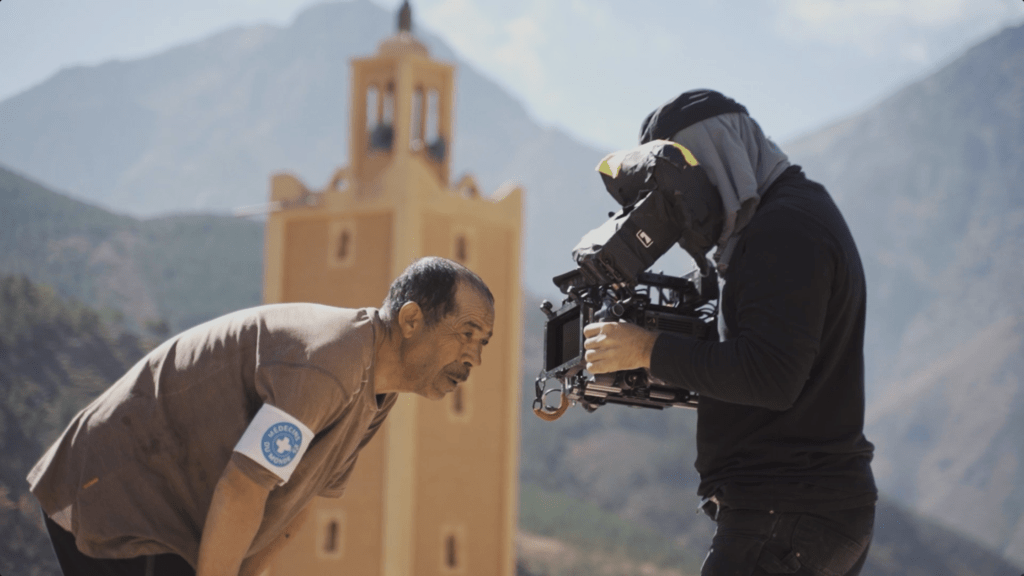
We shot the behind-the-scenes for Médecins du Monde’s campaign, directed by Jodeb with cinematography by Kristof Brandl, filmed on location around Marrakech and Imlil alongside Top Dog Productions — see the BTS. That project is the direct reference point for this kind of work: an international humanitarian organization, real field conditions in the Atlas region, and a director-led production standard applied to a subject that required sensitivity rather than spectacle.
That same standard — outlined on our Philosophy page — applies whether the client is a luxury brand or an NGO documenting aid work in a rural community. The crew scales the same way it does for any production; see our film crew services in Morocco for how that works in practice. A lean two- or three-person unit is often the right size for field-sensitive NGO work, not a full commercial crew with heavy equipment that draws attention away from the people and program being documented.
Field Conditions and Locations NGOs Work In
Morocco’s NGO and institutional sector operates well beyond Marrakech. Rural communities, the Atlas mountains, and areas without any production infrastructure are often exactly where the work is happening — not a photogenic backdrop chosen for a treatment, but wherever the organization’s program already exists. That’s a different scouting problem than a corporate or brand shoot. It’s less about finding the most visually striking location and more about working within conditions that already exist: limited access, unpredictable weather at altitude, no power or crew support nearby, and a schedule that follows the organization’s program rather than a shot list built in advance. A crew used to adapting on the ground, rather than requiring a controlled set, is the actual requirement for this kind of project.
Budget and Timeline for NGO Video Production
NGO budgets are typically tighter and more heavily scrutinized than commercial ones, and timelines are often tied to a specific campaign, a grant reporting deadline, or a limited field-visit window rather than a flexible release date. The cost variables are the same ones covered in our corporate video cost guide for Morocco — crew size, shoot days, and locations — but NGO projects are typically scoped leaner by design rather than priced against a standard commercial rate card.
Contact YAWK for Video Production NGO Morocco Projects
If your organization needs a campaign film, program documentation, or field coverage in Morocco, YAWK can scope a production built around your budget and timeline rather than a standard commercial package. Reach out with your program details, the story you need told, and your available shoot window, and we’ll come back with a proposal built for that reality.
YAWK — video production company based in Marrakech, Morocco since 2013. contact@yawkteam.com — yawkteam.com
FAQ
Yes — YAWK produces campaign films, field documentation, and awareness content for NGOs and institutions working in Morocco.
Yes — we shot the behind-the-scenes for Médecins du Monde’s campaign, directed by Jodeb, filmed around Marrakech and Imlil alongside Top Dog Productions.
Yes — NGO work often happens outside Marrakech in rural or field settings without production infrastructure, and our crew is built to adapt to those conditions rather than require a controlled set.
It’s typically scoped leaner, matching NGO budget realities rather than a standard commercial rate — crew size and shoot days are adjusted accordingly.
Most projects need multiple deliverables from one shoot — a short cut for social media, a longer version for donor or grant presentations, and raw footage the organization can reuse.